Close
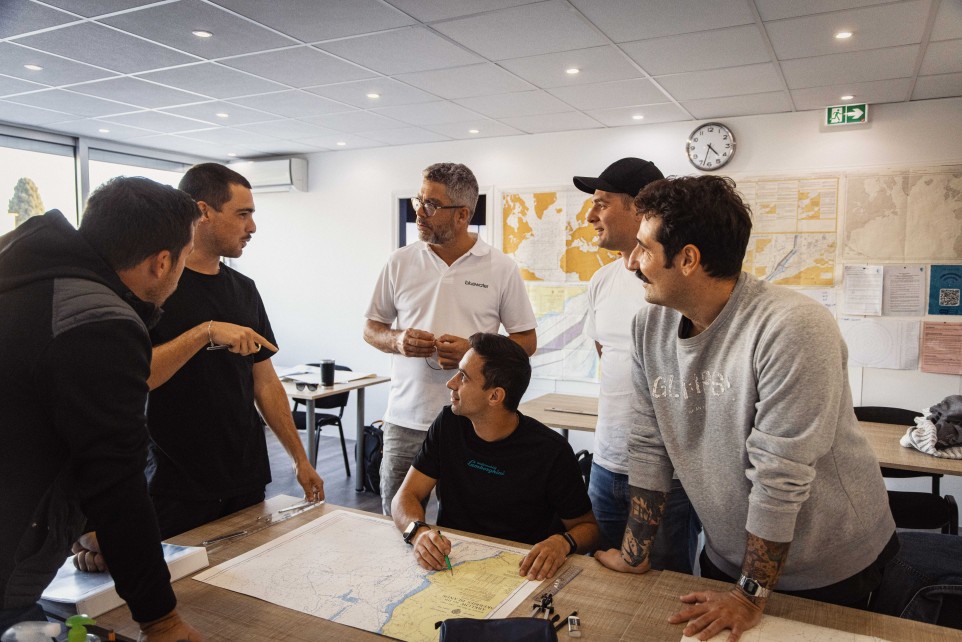
Club de Mar, Palma de Mallorca, Monday 5th October 2026. Sponsored by Bluewater. Captain Ajit Jacob flew down from MCA HQ to host a breakfast round-table session with senior yacht crew and superyacht businesses. There were no PowerPoint presentations; this gathering was in the round because Captain Jacob came to listen as much as to speak. From digital certificates and modernised training to AI, autonomous vessels and new career pathways, a lively industry discussion offered an encouraging glimpse of how maritime regulation is adapting to the realities of modern yachting.
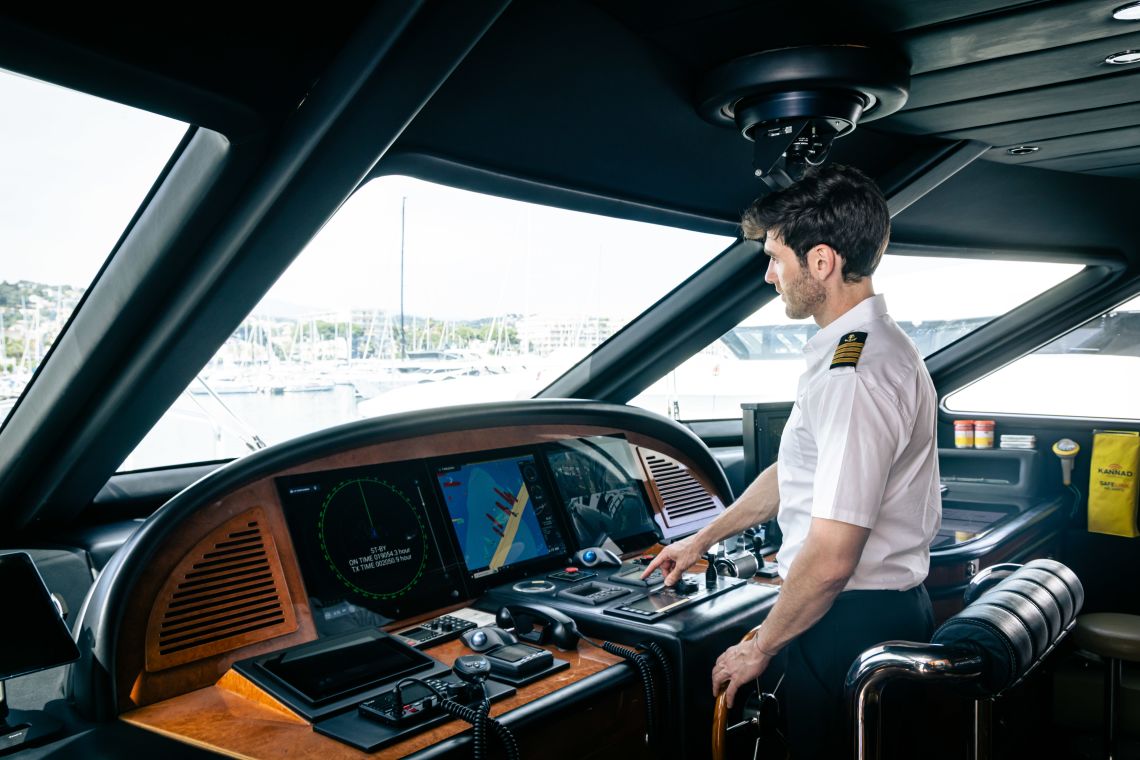
For an industry that thrives on innovation, yachting still has its fair share of paperwork: certificates, endorsements, sea-service testimonials and training records remain an unavoidable part of professional life at sea. But if the discussion at the industry roundtable is anything to go by, the direction of travel is clear: more digital, more relevant and, crucially, better aligned with the way today’s yachts and crews actually operate.
What emerged was not simply a list of forthcoming regulatory changes. It was a broader picture of a maritime administration trying to modernise alongside an industry that is evolving at extraordinary speed.
The MCA is transitioning away from a system dominated by physical documents towards a digital platform for certificates and endorsements. Digital Flag State Endorsements (CECs in old money) are already active for initial applications, but the longer-term ambition is considerably broader. The new digital platform will allow safety and refresher courses to be certificated by MCA-approved training providers directly into the digital application and wallet. This will instantly remove the problems some Spanish seafarers have in getting their UK certificates accepted – in most other flag states these are issued centrally by the administration.
For crew accustomed to travelling with folders of certificates - and who experience the occasional frantic search for the one document required by an inspector - the attraction is obvious. There is an important distinction, however. Commercial digital wallets can provide a convenient place for seafarers to hold their credentials, but responsibility for verifying them ultimately remains with the flag state. The MCA’s approach is therefore designed so that a QR code or digital credential can be checked against the agency’s own database. In other words, digitisation isn’t simply about putting a paper certificate on a phone. It is about making the credential itself securely and independently verifiable.
Training is undergoing an equally significant rethink.
The International Maritime Organisation (IMO) is carrying out a comprehensive review of the STCW Convention, but international regulation moves slowly. Full implementation of the current review could stretch well into the 2030s. The MCA’s answer is not to wait.
Through its continuous Modernisation Groups, UK syllabi can be revised much more frequently, allowing training to respond to changing technology and lessons emerging from real-world incidents.
That should mean courses which better reflect what crew actually encounter onboard. GMDSS training is a good example. Course content is soon being updated to recognise contemporary vessel communications, including satellite platforms such as Starlink, while reducing the emphasis placed on mandatory, but obsolescent equipment.
Safety lessons are evolving too. Following continued fatalities in enclosed spaces across the maritime sector, a dedicated Enclosed Space Entry course is expected to become a mandatory STCW requirement. Again, this is likely to be enforced by the MCA before the IMO legislates for it.
There is a practical philosophy behind these changes: training should evolve because vessels, equipment and risks evolve. No conversation about the future of shipping is complete without artificial intelligence and autonomy, and Palma was no exception.
AI concepts are already finding their way into training standards, notably in areas such as maritime cybersecurity and bridge watchkeeping. Linked to this is the development of autonomous vessels, although their current use remains concentrated largely in survey and defence applications and smaller craft. Remote operating centres capable of controlling much larger ships point towards a fascinating future for commercial shipping.
Does that mean today’s young deckhand should reconsider a career at sea?
Quite the opposite.
One of the strongest messages from the discussion was that technology does not eliminate the need for maritime experience. Even highly automated ships and shore-based control centres need people who understand what happens at sea - people with the judgement and situational awareness that comes from actually having stood a watch and operated a vessel.
Indeed, the industry’s bigger challenge may be finding enough qualified people.
The UK Maritime Charities Group produced a report last year, ‘Seafarers 2040 ’, forecasting a projected shortfall of more than 6,000 UK seafarers by 2040. For younger crew wondering whether maritime qualifications still represent a worthwhile long-term investment, that is a powerful signal. It is also worth noting that UK statistics do not include many yachts and yacht crew because many are flagged outside the UK, so the real shortfall in crew numbers required will be considerably bigger. There is a Superyacht Alliance think tank called ‘Raising the Bar’ which may shortly engage in answering the question “how many professional crew are there in both private and commercial yachts” with the follow-on question “how many will we need to operate all the vessels currently under construction or ordered”. This is to be discussed this November in Amsterdam at the Superyacht Forum within METS.
Career progression was another major theme - particularly the sometimes confusing relationship between yacht qualifications, those of other sectors such as fishing, workboats and tugs and unlimited commercial certification.
For deck officers, a pathway has long existed, but there was a requirement to spend a substantial amount of time on campus in the UK, and no credit was given for the learning from yacht modules. Now holders of a Master 3000 (Yacht) can progress to Master Unlimited (Yacht).
Following a question from the group, Captain Jacob confirmed that this will be possible by completing the nine unlimited modules and by taking only one oral examination. The oral for Chief Mate Unlimited can be bypassed because they have sailed already as master. This recognises their existing yacht certification rather than unnecessarily repeating training. The principle being followed is that there will be no dilution of the training standard for the unlimited yacht pathway. Candidates will obtain a UK academic qualification as well as a CoC just as in the normal unlimited route.
The route is announced and officially sanctioned, but is not yet available as two of the unlimited yacht modules have yet to be written: Yacht Stability and Yacht Operations. John Wyborn confirmed that Bluewater will be writing both unlimited yacht modules and will work with a UK maritime college for delivery. Bluewater will also be seeking some approvals for the other modules and will do a mapping between OOW and Master Nav and Radar and ECDIS to create a top-up course for the unlimited NAEST course in BW’s full mission bridge simulator in Antibes.
Engineering is moving in a similar direction.
Following consultation, the MCA is developing a Chief Engineer Certificate of Competency pathway for yachts, without a kilowatt limitation, reflecting the uncapped progression already possible on the deck side.
For an industry operating ever larger and more technically sophisticated yachts, creating credible routes for experienced yacht engineers to continue progressing is an important development.
And career progression isn’t solely about certificates.
The old paper MCA Yacht Training Record Book is well overdue for replacement, and this project is now well advanced. The new one, of course, will be fully digital. Interestingly, such is the frustration with the old TRB, one 70m yacht captain at the round-table described a training app he has built himself to track learning onboard. His programme is divided into stages across a crew member’s first 24 months. Instead of leaving junior crew wondering what comes next, clearly defined six-month learning tiers give them visible targets and a reason to remain on board.
Interestingly, the approach of the new Digital Training Record (DTR) will be remarkably similar. It is a deceptively simple idea: make training relevant to the person actually doing it. Three captains in the round table group volunteered to be on the DTR working group hosted by the Superyacht Alliance.
If there was one area where the Palma discussion demonstrated the value of regulators and working yacht professionals sitting around the same table, it was sea-service verification.
Rules that may appear perfectly reasonable on paper can become awkward when applied to the operational patterns of a yacht. Engineers, for example, can find themselves recording mileage for sea service verification even though the relevant matter is really hours spent operating the machinery. Deck crew, in the old TRB, had many tasks relating to bridge navigation; this is fair up to a point, but most deckhands spend very little time on the bridge except as lookout on passage and deliveries. This is why the new DTR will take the navigational learning outcomes of the RYA Powerboat Level 2, Tender Operators and Advanced Powerboat courses and include them as tasks. It doesn’t make these courses mandatory, but a simple and effective way of demonstrating competence could be to upload a certificate from an approved RYA centre. This will also reduce the workload of deck officers in supervising the completion of these tasks.
Captain Jacob noted some views, which were strongly expressed in the discussion, that there is a marked difference in safety standards between yachts commercially operated and private. Some flag states (including Red Ensign flag states) pay scant regard to safety on private yachts, more than two-thirds of the fleet. Are the lives of crew working on private yachts worth less? He also noted the view that crew brought into the industry on sailing vessels are vastly more professional than those on motor yachts. This may be a controversial view, but it was strongly supported in the room.
These practical concerns were aired directly during the roundtable and acknowledged by Captain Jacob as areas to consider as sea-time verification and training develop.
That dialogue is important. Good regulation has to protect standards without losing sight of how vessels actually operate.
Perhaps the most encouraging aspect of the Palma meeting was not any individual regulatory announcement.
It was the sense that maritime training and certification are becoming more responsive.
Digital credentials promise less paperwork and easier verification. Continuously updated syllabi can keep training closer to contemporary onboard reality. New unlimited qualification pathways can give yacht professionals greater career mobility. Structured onboard development can encourage talented crew to remain in the industry.
And even AI and autonomy - technologies sometimes portrayed as threats to traditional maritime careers - may instead increase the value of genuinely experienced mariners.
Yachting has never stood still. Yachts are becoming larger, technology more sophisticated and career boundaries between the superyacht and wider maritime sectors increasingly permeable.
The regulatory framework now has the considerable task of keeping pace.
Judging by the conversation in Palma, that process is very much underway - and for the next generation of professional yacht crew, there is plenty on the horizon to be optimistic about.
Captain Jacob will be speaking at the Superyacht Forum of METS in Amsterdam this November.